

The Pinterest Extension Quietly Exploding to Thousands of Installs with One Simple Insight
In this interview, Ruslan shares how he built a simple Pinterest extension that started growing faster than anything he worked on before.

👋 Hello, Idris here! Welcome to this week's Indieniche newsletter. Each week, I feature tips and stories from successful self-made founders, share insights on building great products, talk about growing your business, and showcase essential tools to help you build and scale better.
If you've found this newsletter helpful, please spread the word to your friends and consider subscribing if you haven't yet.
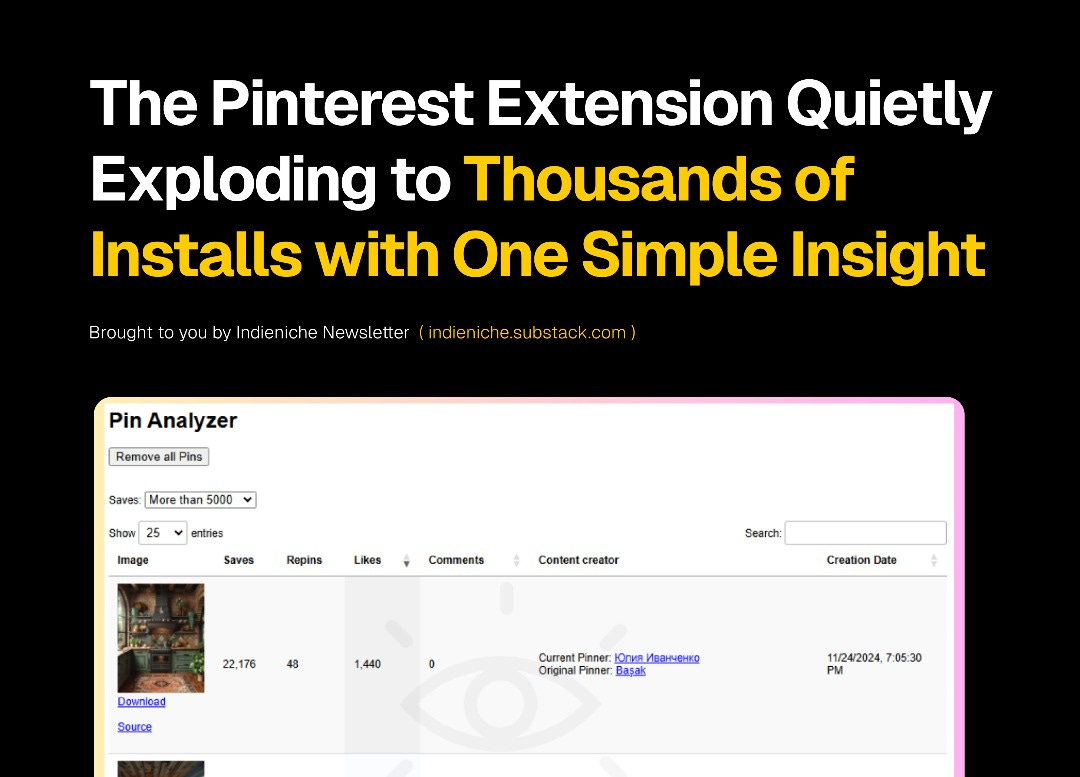
In this interview, Ruslan breaks down how he built a Chrome extension for Pinterest marketers that found an audience faster than any of his earlier projects. He explains how he validated the idea using keyword research, why switching niches mid-build was the smartest move he made, and how a single Chrome Web Store badge triggered a surge of growth that changed everything.
Ruslan shares:
His backstory and how he started.
How he got his first free and paid customers for his product.
What was effective in attracting customers to his product?
His competitive advantages, what gives him an edge, and insights that have proven beneficial to his operations.
Which books, podcasts, or other resources have had the greatest impact on him.
Advice he'd offer to entrepreneurs who are just starting out.
Q. Hello! Who are you and what product are you working on currently, and who is your target audience (Age range)?
Hello! I’m Ruslan, a software engineer. I’m working on a Pinterest extension called Pinterest Pin Stats – Sort Pins. It’s built for people who promote on Pinterest, including solo creators and marketing agencies. Most users tend to fall in the 25–40 age range.
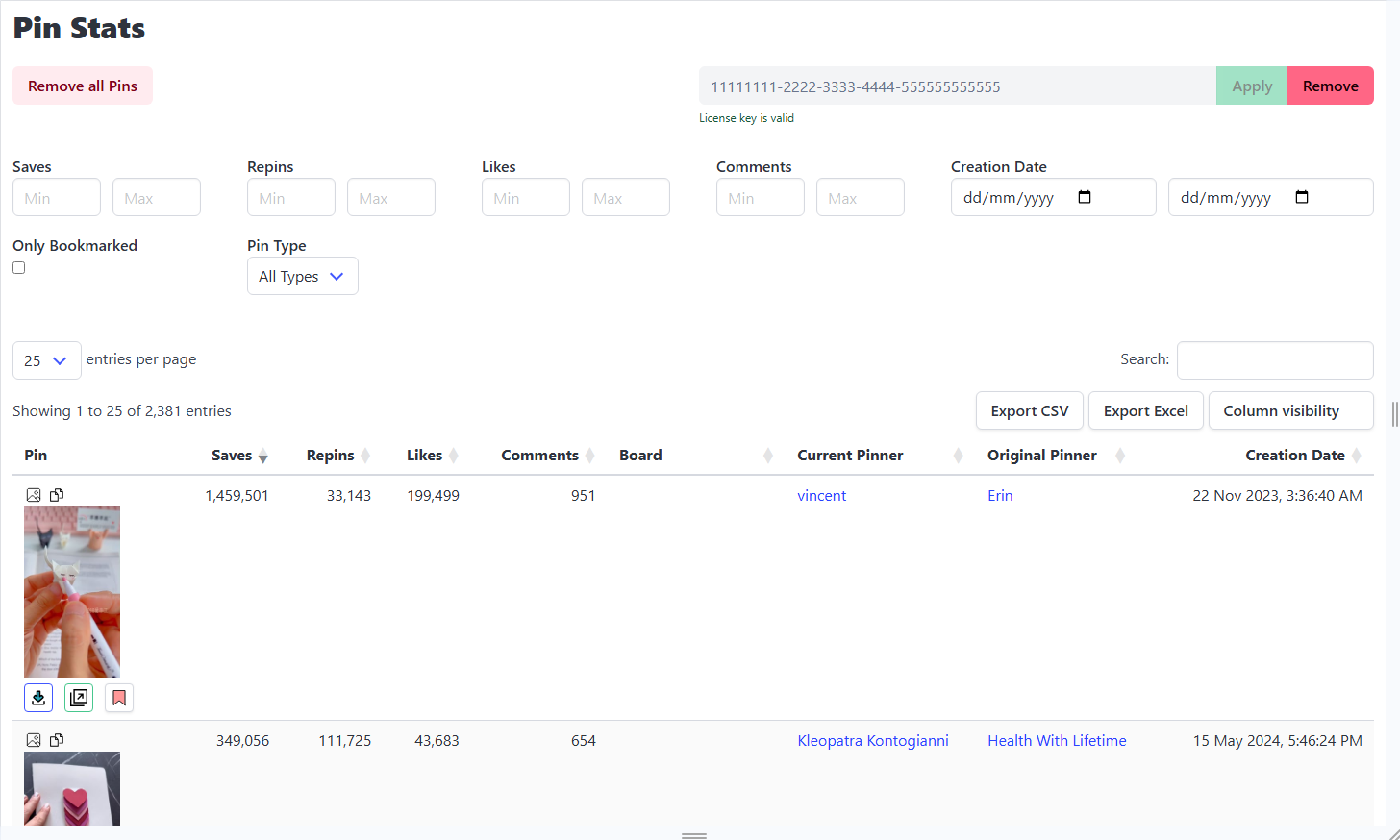
Q. What is your backstory and how did you come up with your idea? What year did you start?
I’ve worked as a full-stack developer for about ten years, and during that time I kept trying different side projects. Most of them didn’t take off, but they taught me how to build websites, scrape data, think about SEO and handle marketing.
In 2025, I shifted my focus to browser extensions. That’s where this project started.

Q. Take us through the process of building the first version of your product MVP.
When I began, I wanted an idea that was simple to build, had a few existing competitors and came with clear search demand. I looked for keywords people might use when searching for an extension in the Chrome Web Store or on Google. Semrush helped me understand which keywords had volume and were worth targeting.
Two ideas stood out: a “Detect WP Theme” extension and a Pinterest stats tool. I built and shipped the first extension because it matched my criteria well. But even while working on it, I kept thinking the Pinterest idea had more potential, so I moved to that right after releasing the first one.
Learning how to build extensions was slow at first, especially with my limited JavaScript experience. With the first extension behind me, I had enough confidence to start building Pinterest Pin Stats. After the core functionality was ready, I focused on SEO. I wrote a long description, optimized the title and short description, and translated everything into 52 languages.
The last step was visuals: two large banners, one medium banner and a set of icons.
The whole process took about five weeks.
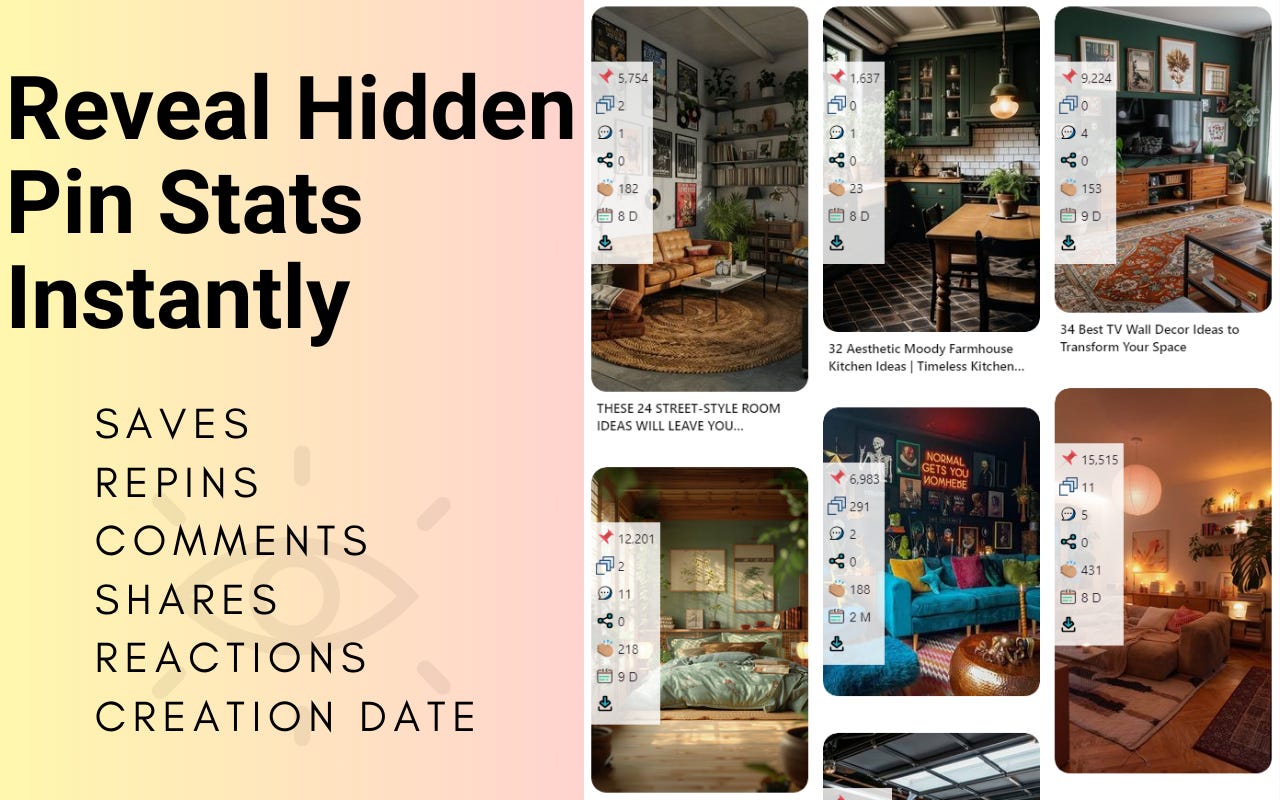
Q. How many employees do you have working on your product? Do you have any co-founders?
I work alone.
Q. How much monthly traffic do you receive?
The extension gets about 3,800 views and around 2,000 installs each month.
Q. How did you get your first customers for your product and how many free/paid customers do you have currently? (Feel free to list them out).
I usually run paid traffic to boost early installs, but this time the keywords were too small to run a useful campaign. My first users came organically from Chrome Web Store search. That’s still where most new installs come from.

Q. Since you launched your product, what has worked to attract customers?
Applying for the Featured badge on the Chrome Web Store made a big difference. After it was approved, installs jumped about seven-fold for a few days, then slowed but stayed higher than before.
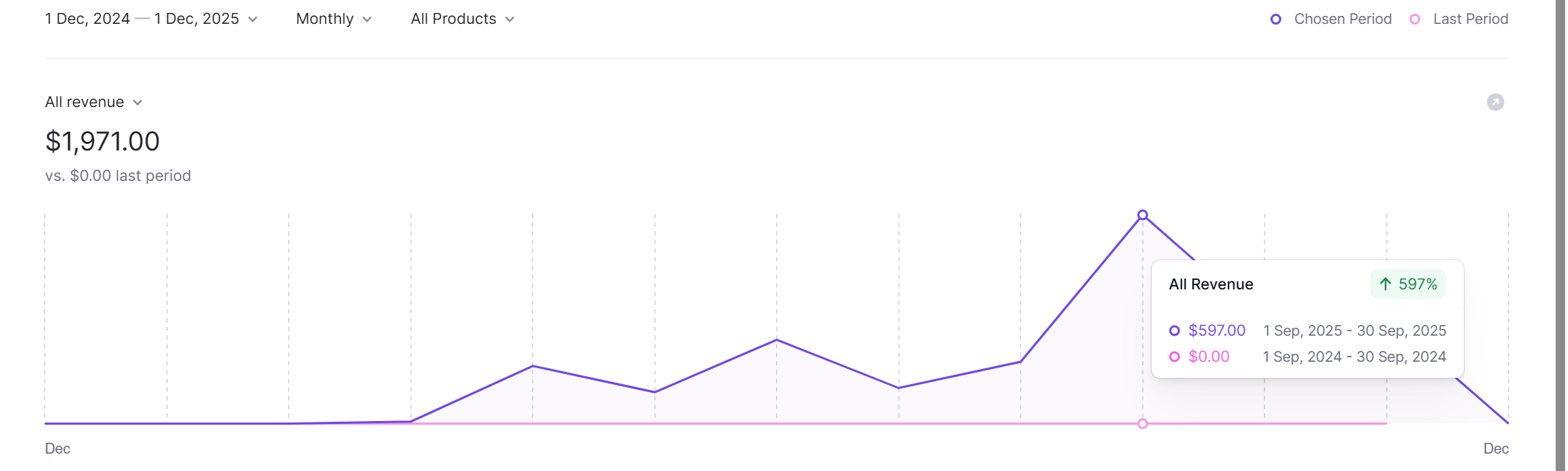
Reddit has also been helpful. I post updates about progress and milestones. People respond with questions, ideas and feedback, and every time I share these updates, I notice a spike in sales. One post in September tripled my usual MRR.
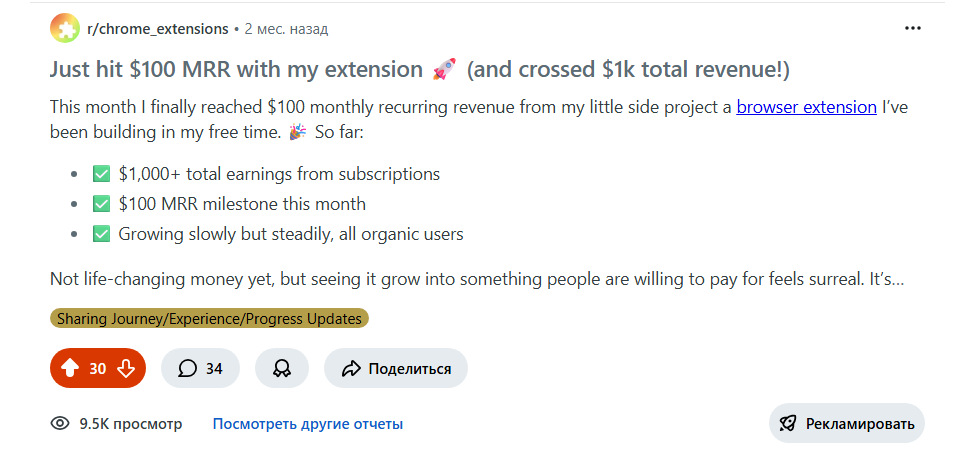
Q. How is your product performing currently, and what are your plans for the future? Can you share your current metrics and revenue figures?
Growth has been steady. My main goal now is to make the extension more useful by adding more features.
Q. Since the inception of your business, have you gained any insights that have provided you with a competitive advantage and proven beneficial to your operations?
SEO matters a lot. A well-optimized Chrome Web Store listing or landing page brings you traffic for months.
Being open about numbers and progress helps you connect with people who can benefit from what you’re building, and it often helps you too.
Q. What tools have helped you grow your product?
Claude Code, ChatGPT, LemonSqueezy and Canva.
Q. Which books, podcasts, or other resources have had the greatest impact on you?
Designing Data-Intensive Applications by Martin Kleppmann
The YouTube channel “Starter Story”
Q. What advice would you offer to entrepreneurs who are looking to start or have just begun their journey?
Don’t chase perfection. Ship the core feature fast, ideally within a month, then focus on promoting it. If you keep polishing forever, you’ll burn out before anyone even tries what you built.
Q. Are you looking to hire for certain positions right now?
I’m not hiring right now.
Thank you for taking the time to answer these questions! What is your contact info if people would like to inquire about your services? You can add all your links.
Here’s my Email address, and my Reddit!
Let me know what you learned from this interview and have a productive week! 🙏

Indie Tip of the Week
Pay attention to the first handful of users like they’re your whole market. Watch exactly how they use your product, where they get stuck, and what they ask for first. Those early interactions reveal the features that matter most and the frustrations that will block growth. Build based on that insight, not guesses, and you’ll turn a rough prototype into something people actually love.
Indie Product of the Week
Alai is a tool for anyone who wants to make presentations without getting stuck on design. You enter your content or ideas, and it turns them into ready to use slides. You can experiment with different layouts, adjust what you need, and have a polished deck in minutes. It’s useful for students, freelancers, and small teams who need presentations quickly without wrestling with software
Indie Trivia Of the Week
What U.S. state is home to Acadia National Park?

Share Your Product with Indie Niche Users
Do you have a product you'd like to share with our community of over 3,000+ indie niche founders?
Drop us a line detailing what makes your product stand out, whether it's a SaaS, marketplace, app, newsletter, or anything else innovative. We're eager to hear from you!
We will pick a product to feature in next week’s newsletter. Thanks for sharing and looking forward to hearing from you.