

How He Turned His Open Source Directory Into a $30K BoilerplateBusiness
After his OpenAlternative story became one of Indieniche’s most read features, Piotr returns to share how he turned that success into Dirstarter, a $5K/month boilerplate built from the same codebase.

👋 Hello, Idris here! Welcome to this week's Indieniche newsletter. Each week, I feature tips and stories from successful self-made founders, share insights on building great products, talk about growing your business, and showcase essential tools to help you build and scale better.
If you've found this newsletter helpful, please spread the word to your friends and consider subscribing if you haven't yet.
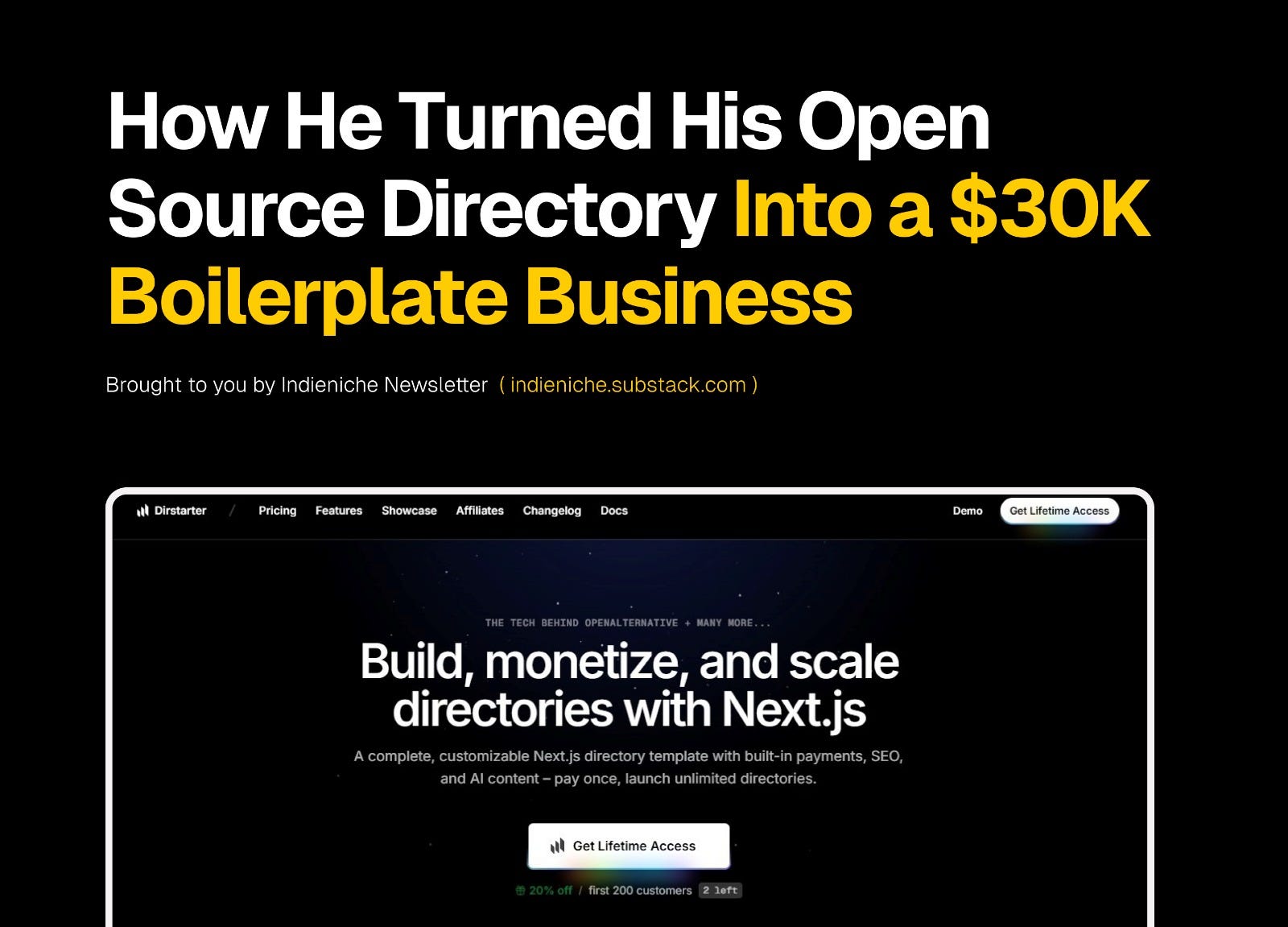
You might remember Piotr from his OpenAlternative feature, one of the most popular stories we’ve published. This time, he’s back with a different angle. In this interview, Piotr explains how OpenAlternative didn’t just become a successful directory, but the foundation for Dirstarter, a boilerplate now doing $5K/month. He shares why selling the blueprint made more sense than fighting copycats, and how reusing what already worked helped him move faster with less risk.
Piotr shares:
His backstory and how he started.
How he got his first free and paid customers for his product.
What was effective in attracting customers to his product?
His competitive advantages, what gives him an edge, and insights that have proven beneficial to his operations.
Which books, podcasts, or other resources have had the greatest impact on him.
Advice he'd offer to entrepreneurs who are just starting out.
Q. Hello! Who are you and what product are you working on currently, and who is your target audience (Age range)?
Hi! I'm Piotr Kulpinski, a solo founder and indie hacker from Kraków, Poland. I run Dirstarter, a Next.js boilerplate for building profitable directory websites. I also run OpenAlternative, a directory of open source alternatives to proprietary software that generates over $6,500 MRR—and Dirstarter is actually the exact codebase I use to run it.
My target audience is indie hackers, solopreneurs, and developers who want to build directory businesses without spending months on development. Most of my customers are technical enough to customize a Next.js codebase but don't want to reinvent the wheel for common features like payments, SEO, or admin dashboards. The age range skews toward 25-45 year olds, people who have some development experience and are looking to launch a side project or build a portfolio of small, profitable websites.
Q. What is your backstory and how did you come up with your idea? What year did you start?
The story starts with OpenAlternative, which I built in 48 hours back in 2024 as a simple directory of open source software alternatives. It went viral, getting 100,000 visitors in the first week, and eventually grew into a business generating over $6,500/month. Here's the thing though: OpenAlternative was getting copied constantly. The design was simple and clean, which resonated with people—but it also made it easy to replicate. I'd see clones popping up on Reddit almost every week.
That's when I had my realization: code is not the moat anymore. With AI tools making development faster than ever, anyone can clone a website in days. Instead of fighting the copycats, I decided to lean into it. If people were going to copy me anyway, why not make it easier for them—and make some money in the process? Dirstarter launched in February 2025. I packaged up the OpenAlternative codebase, stripped out the specific stuff, made it generic, and started selling it as a premium template.

Q. Take us through the process of building the first version of your product MVP.
Since Dirstarter was based on an already-working product, the MVP came together fast. It took me 2 days to clean up the codebase and test everything. The main work was stripping out OpenAlternative-specific features that wouldn't make sense in a generic template—things like repository details, alternative pages, comparison pages, and all the programmatic SEO stuff I'd built specifically for open source software.
The V1 was as barebones as it could possibly be. Same layout as OpenAlternative, but focused on the core directory functionality: listings, categories, search, admin dashboard, and payment integration.
Then came the harder part: building the landing page took another 5 days. And honestly, the hardest part of all was writing the documentation —but AI helped me tremendously with that. So in total, about one week from deciding to do it to having a sellable product.
Since V1, I've added a lot of features based on customer feedback:
• AI content generation for listing descriptions
• Better admin dashboard
• Image upload functionality
• Blog post management
• And many more improvements
You can see the full changelog at dirstarter.com/changelog.
Q. How many employees do you have working on your product? Do you have any co-founders?
It's just me—solo founder, no co-founders, no employees. I handle everything: development, support, marketing, documentation. The beauty of selling a boilerplate is that once it's built, the ongoing work is mostly adding new features and answering support questions. I've automated a lot of the business operations, which lets me run Dirstarter alongside my directories without burning out
Q. How much monthly traffic do you receive?
Dirstarter gets around 3,000 unique visitors per month. It's not huge traffic, but the conversion rate is solid because people who land on the site are usually actively looking for a directory solution. Quality over quantity. A lot of my traffic also comes indirectly through OpenAlternative, which acts as a living demo of what Dirstarter can do.
Q. How did you get your first customers for your product and how many free/paid customers do you have currently? (Feel free to list them out).
This is the crazy part: I got my first sales on day one without even posting about it anywhere. All I did was add a small link to Dirstarter on OpenAlternative, and sales started flowing immediately. It was like people were just waiting for it to appear.
People had been asking me about the OpenAlternative tech stack for months. They wanted to know how I built it, what tools I used, whether I'd share the code. When I finally offered it as a product, there was already pent-up demand.
Currently, I have around 200 paying customers. As for where they come from now:
• OpenAlternative and my other directories (still the biggest source)
• Twitter/X (building in public helps)
• Affiliates (more on this below)
• SEO (starting to pick up recently)
Some notable directories built with Dirstarter:
I collect the best ones at dirstarter.com/showcase.

Q. Since you launched your product, what has worked to attract customers?
The best channel by far has been affiliate marketing. I give affiliates 30% commission on every sale they refer. Yes, that's a significant chunk of revenue to give up, but it's absolutely worth it. I invested time building out a partner network—reaching out to newsletter writers, YouTubers, and indie hackers with audiences interested in building online businesses.
The beauty of affiliates is that they do the marketing for you. They write about Dirstarter, recommend it in their content, and I only pay when they actually drive a sale. It's pure performance-based marketing. Beyond affiliates:
• Building in public on Twitter/X has been valuable for credibility
• OpenAlternative as a living demo continues to drive traffic
• SEO is starting to work, I've been investing in content lately and it's slowly picking up.
I haven't done a Product Hunt launch yet, but it's on my list. I wanted to have more features and testimonials before doing a big push there.
Q. How is your product performing currently, and what are your plans for the future? Can you share your current metrics and revenue figures?
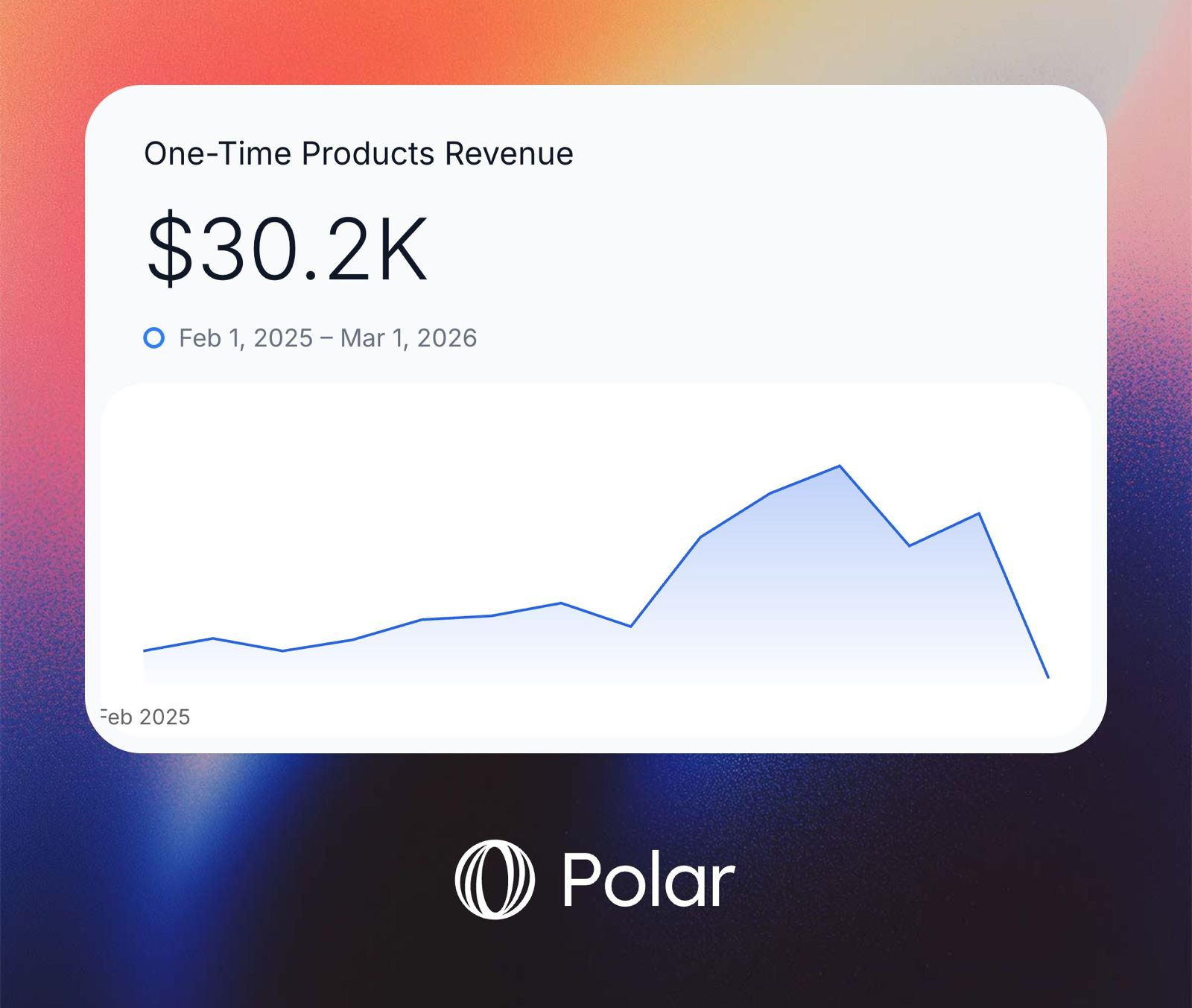
Current metrics:
• Revenue: ~$30K
• Customers: ~200 total
• Traffic: ~3K monthly visitors to dirstarter.com
• Pricing: $159 (Standard) and $199 (with AI features + private community)
Pricing evolution: I started at $97 for early birds to validate demand. Once sales proved the product had legs, I raised it to $147, then later introduced a second tier with AI features and private community access, bringing prices to $159 and $199.
All purchases include lifetime updates, lifetime support, and can be used on multiple websites.
Roadmap:
• Revamped blog post management (currently in development)
• Improved user management with role-based actions
• Self-serve submission system for tool submitters
The goal is to keep making Dirstarter more complete so customers need less custom development to launch a fully-featured directory.
Q. Since the inception of your business, have you gained any insights that have provided you with a competitive advantage and proven beneficial to your operations?
The biggest insight: I'm not just selling code, I'm selling a proven strategy. Lots of boilerplates give you a starting point. What makes Dirstarter different is that I use this exact codebase to run directories generating over $6,500/month.
It's not theoretical, it's battle-tested. Dirstarter comes with everything you need to run a monetized directory from day one:
• Ad placements
• Premium/featured listings
• Affiliate link integration
• SEO optimization baked in
Customers aren't buying a template, they're buying a shortcut to a business model that's already working.
Another insight: code is not the moat anymore. When I realized my site was getting cloned constantly, I stopped trying to protect it and started monetizing the demand instead. If you can't beat the copycats, sell them the blueprints.
Q. What tools have helped you grow your product?
For the product itself:
• Next.js – The foundation of the entire codebase
• PostgreSQL – Database
• Vercel – Hosting
• Stripe – Payments
• Resend – Transactional emails
For marketing and operations:
• Twitter/X – Building in public, connecting with customers
• Affiliate management tools – Managing affiliate program
• AI tools – Helped massively with writing documentation
• Typefully – Scheduling social media content
For the directories I run (which feed into Dirstarter sales):
• N8N – Automation workflows
• Logo.dev – Automatic favicon fetching
• ScreenshotOne – Automatic website screenshots
The biggest leverage has been using my own directories as both a marketing channel and a testing ground for Dirstarter features.
Q. Which books, podcasts, or other resources have had the greatest impact on you?
Books:
• "Million Dollar Weekend" by Noah Kagan – This one perfectly aligns with my approach: build fast, validate faster, don't overthink it.
• "Company of One" by Paul Jarvis – Reinforced my belief that you don't need to scale to be successful.
• Alex West's books (founder of CyberLeads) – Practical insights on building directory businesses.
Communities:
• Indie Hackers – Reading other founders' stories and sharing my own
• Twitter/X indie hacker community – Following and engaging with other builders
The biggest resource is honestly just doing the work. Building OpenAlternative taught me more about SEO, monetization, and product development than any book could. Dirstarter exists because I learned by building.
Q. What advice would you offer to entrepreneurs who are looking to start or have just begun their journey?
1. Build something you'll actually use yourself.
Dirstarter exists because I needed it first. I built OpenAlternative for my own use, then packaged it for others. When you're your own customer, you understand the problems deeply.
2. Launch faster than you think you should.
Dirstarter V1 took one week. It was barebones, but it was enough to validate demand. I've added dozens of features since then based on real customer feedback—not guesses about what people might want.
3. Your existing projects can become new products.
I didn't set out to build a boilerplate business. It emerged naturally from a project I was already running. Look at what you've already built—there might be a product hiding inside it.
4. Code is not the moat.
If your business depends on people not being able to copy your code, you don't have a business. Focus on things that are harder to replicate: your audience, your reputation, your understanding of the customer, your speed of execution.
5. Give affiliates generous commissions.
30% feels like a lot to give away, but affiliates who are well-compensated actually promote your product. It's the best marketing ROI I've found.
6. Consistency beats everything.
I've been building in public, shipping features, and showing up every day. That compounds over time. The people who win are the ones who don't quit.
Q. Are you looking to hire for certain positions right now?
Not at the moment. I'm keeping things lean and solo for now. The combination of automation and a manageable product scope means I can handle everything myself.
If that changes, I'll probably look for help with content writing first, blog posts, documentation updates, SEO content for the directories.
Thank you for taking the time to answer these questions! What is your contact info if people would like to inquire about your services? You can add all your links.
Thanks for having me! Here's where you can find me:
Social:
• GitHub
• Website
Products:
See Dirstarter in action:
• Showcase of directories built with Dirstarter
• Customer testimonials on the homepage
I share my journey building in public on Twitter, so follow along if you're interested in directories, boilerplates, or indie hacking in general. Always happy to chat!
Let me know what you learned from this interview and have a productive week! 🙏

Indie Tip of the Week
Progress often hides in boring work. The unglamorous tasks like fixing small bugs, rewriting unclear copy, or answering user emails are usually where products actually get better. Founders who stick around for these moments learn faster than those chasing big launches. Small, consistent improvements compound quietly, and over time they make the difference between something people try once and something they keep coming back to.
Indie Product of the Week
ApplyGigs is built for job seekers who are tired of sending out applications and hearing nothing back. Instead of treating every role the same, it pushes you to slow down and apply with intent. The platform helps you tailor your resume and cover letter to each job, so you’re not just blasting applications but actually matching what employers are looking for. That alone changes how you approach the search.
What makes ApplyGigs useful is how it fits into a real workflow. You can move from finding roles to preparing your application without bouncing between tools or overthinking every edit. For anyone stuck in the loop of rejection or procrastination, ApplyGigs offers a simple nudge to apply smarter. Try it out!
Indie Trivia Of the Week
What well known product was first built as an internal tool to solve a company’s own problem before being released to the public?

Share Your Product with Indie Niche Users
Do you have a product you'd like to share with our community of over 3,000+ indie niche founders?
Drop us a line detailing what makes your product stand out, whether it's a SaaS, marketplace, app, newsletter, or anything else innovative. We're eager to hear from you!
We will pick a product to feature in next week’s newsletter. Thanks for sharing and looking forward to hearing from you.