


👋 Hello, Idris here! Welcome to this week's Indieniche newsletter. Each week, I feature tips and stories from successful self-made founders, share insights on building great products, talk about growing your business, and showcase essential tools to help you build and scale better.
If you've found this newsletter helpful, please spread the word to your friends and consider subscribing if you haven't yet.
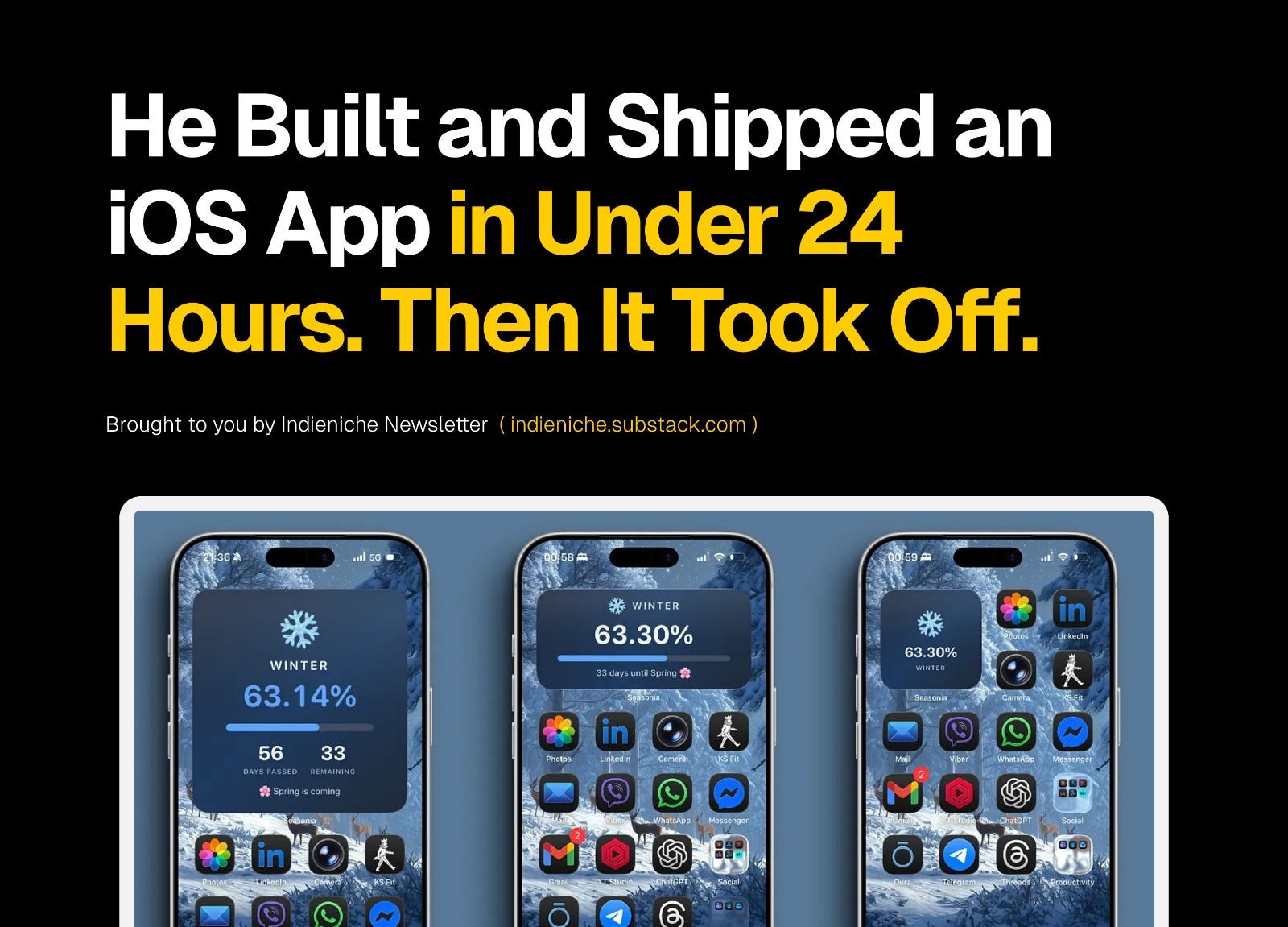
In this week’s Founder Feature, we sit down with Igor, a solo indie developer who challenged himself to build and launch an iOS app in under 24 hours, no marketing plan, no audience, and no expectations. What came out of that experiment was Seasonia, a calm, minimal seasonal widget that quietly climbed the App Store charts, crossed 1,000 downloads, and generated around $700 in revenue in just a few weeks.
If you’ve ever wondered what’s possible when you stop overthinking and just ship, this one’s for you.
Igor shares:
His backstory and how he started.
How he got his first free and paid customers for his product.
What was effective in attracting customers to his product?
His competitive advantages, what gives him an edge, and insights that have proven beneficial to his operations.
Which books, podcasts, or other resources have had the greatest impact on him.
Advice he'd offer to entrepreneurs who are just starting out.
Q. Hello! Who are you and what product are you working on currently, and who is your target audience (Age range)?
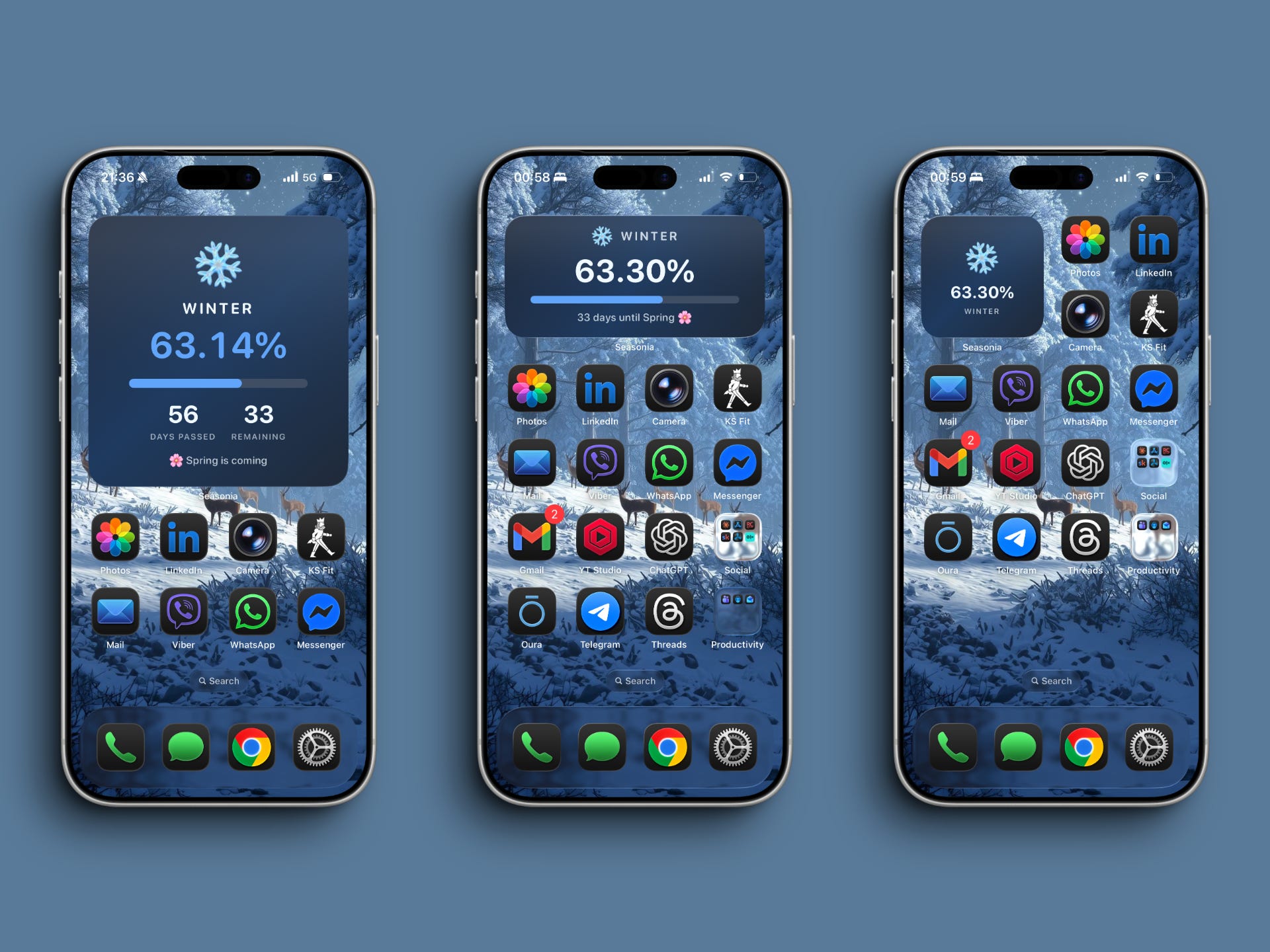
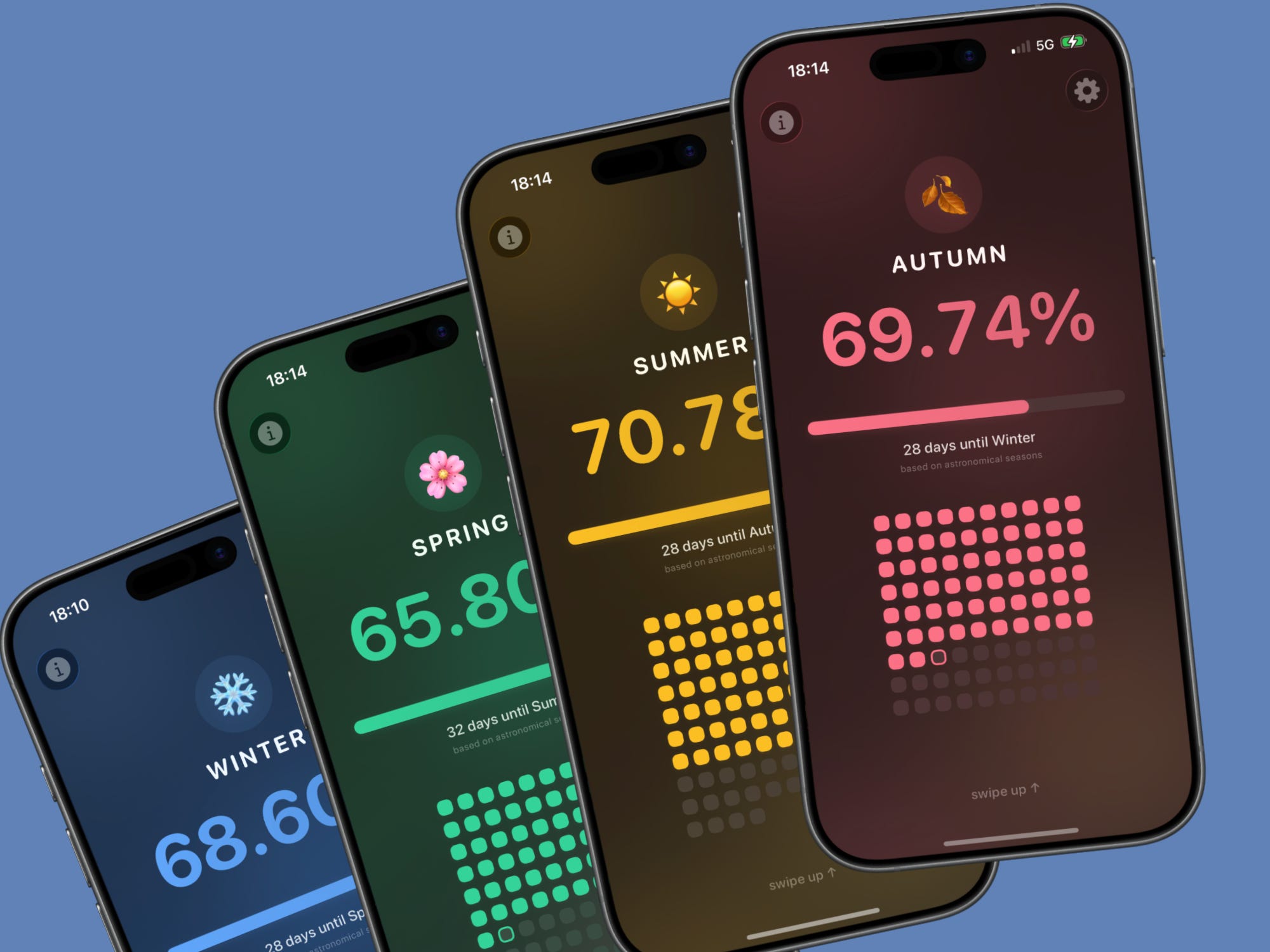
My name is Igor, and I’m an indie developer. I’m currently working on Seasonia, a seasonal widget app designed to help people stay connected with the time of year in a calm, visual way.
The idea behind Seasonia is simplicity. It’s meant to live quietly on your home screen and gently remind you where you are in the current season.
The target audience is intentionally broad, roughly ages 14 to 60. The app is designed to be intuitive and enjoyable for anyone, regardless of technical skill or age.
Q. What is your backstory and how did you come up with your idea? What year did you start?
On February 1st, I decided to run a small experiment. I gave myself less than 24 hours to build and ship a very simple iOS app. There was no launch plan, no marketing budget, and honestly, no expectations.
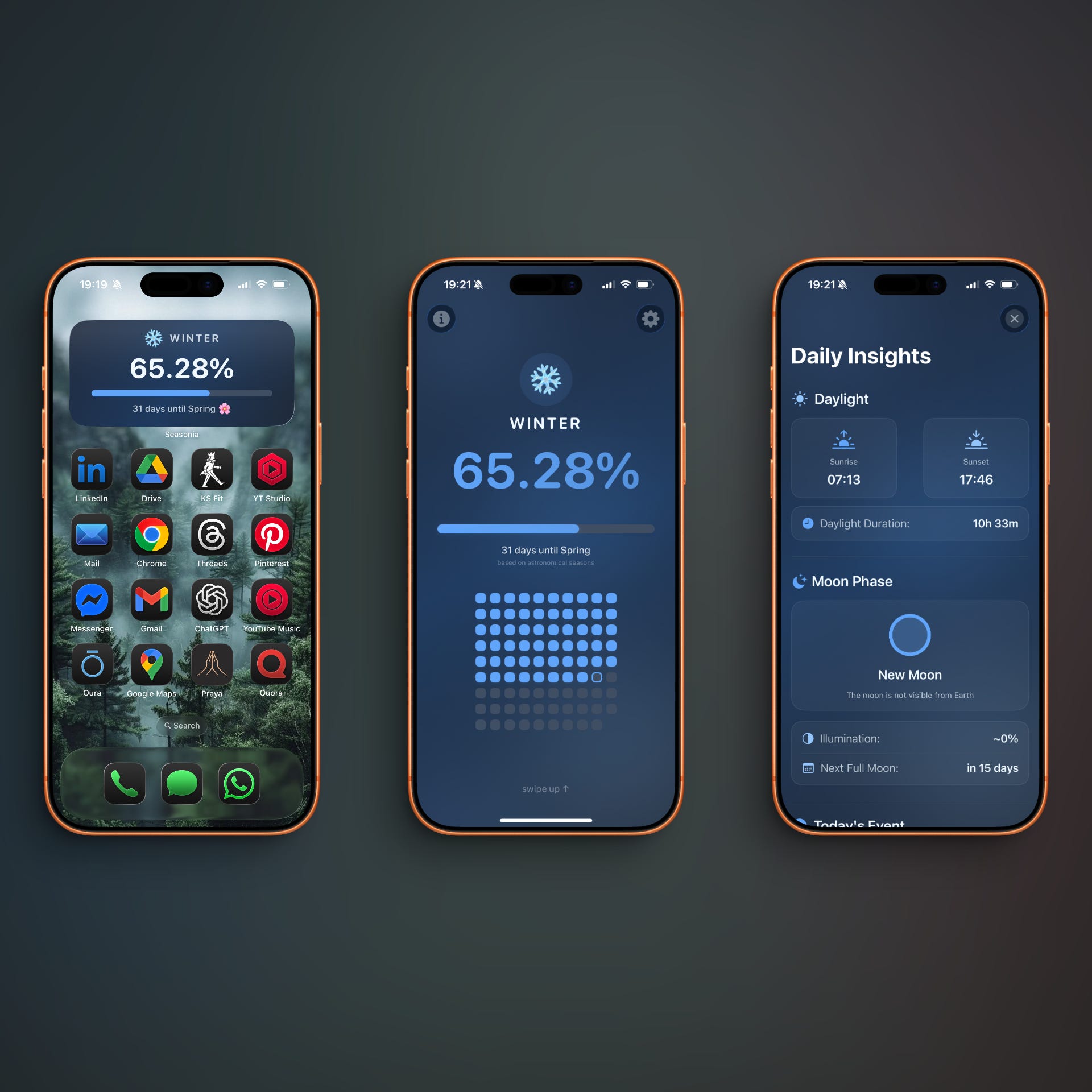
The idea itself was very straightforward: what if a widget simply showed how much of the current season is left? No accounts, no subscriptions, and no complex features. Just a minimal, calm widget on your home screen.
I priced the app at $0.99, mostly as part of the experiment. I didn’t even set up proper analytics at first, I just wanted to see what would happen if I shipped something small and focused.
A few hours after launch, the app unexpectedly climbed into the charts. After an initial spike, it slowed down and then stabilized. As of today, it has crossed 1,000 downloads and generated around $700 in revenue.
It’s not a massive success by startup standards, but considering it was built in under a day, it feels surreal. What surprised me the most is how much people appreciate small, focused apps without subscriptions or noise.

Q. Take us through the process of building the first version of your product MVP.
The MVP process was intentionally uncomplicated. I started with a clearly defined idea and focused only on the core functionality needed to validate it.
Instead of overplanning, I moved quickly into execution. To speed things up, I used AI tools for both development and design. AI helped with coding, generating UI concepts, refining user flows, and solving technical challenges as they came up.
This approach allowed me to build and iterate quickly without getting stuck trying to perfect things too early. The goal was simple: launch something functional as fast as possible, get real users, and improve based on feedback.
Q. How many employees do you have working on your product? Do you have any co-founders?
It’s just me. No employees and no co-founders.
Q. How much monthly traffic do you receive?
The app has been live for about three weeks. So far, it has generated approximately 170,000 App Store impressions and around 13,000 product page views.
It’s still very early, and I’m actively working on improving App Store Optimization (ASO). I regularly update screenshots, descriptions, and keywords to improve visibility and conversion rates. Right now, my main focus is learning from the early data and refining the App Store presence.
Q. How did you get your first customers for your product and how many free/paid customers do you have currently? (Feel free to list them out).
I initially shared the idea on Reddit to validate interest and gather early feedback. However, the main source of traffic and customer acquisition has been App Store search through ASO.
Since launch, the app has consistently ranked in the Top 10 of the Entertainment category in several countries, mostly across Europe. That ranking has significantly increased daily organic traffic and visibility.
Currently, I have 1,000+ paid customers. At this stage, my focus is still on ASO, improving conversion rates, and refining the product based on user feedback.

Q. Since you launched your product, what has worked to attract customers?
The biggest driver has been App Store category ranking. Being consistently ranked in the Top 10 in the Entertainment category has had a noticeable impact on daily downloads and overall visibility.
Q. How is your product performing currently, and what are your plans for the future? Can you share your current metrics and revenue figures?
Overall, the product is performing well for its early stage. Traffic has been consistent, and visibility has remained stable.
I’ve noticed that conversion rates tend to dip slightly during weekends, but they recover during weekdays. Aside from that fluctuation, performance has been steady.
Revenue continues to grow alongside paid user acquisition. My main focus right now is improving conversion efficiency to increase returns without changing the product’s simplicity.
Looking ahead, my priorities are:
Doubling down on ASO optimization, including a new release with updated screenshots and metadata
Improving conversion rates through clearer positioning and value communication
Exploring external traffic sources to boost downloads and help the app climb higher in the charts
At this stage, the focus is on optimization, scaling visibility, and building a strong foundation for long-term growth.
Q. Since the inception of your business, have you gained any insights that have provided you with a competitive advantage and proven beneficial to your operations?
One of the biggest insights has been just how powerful App Store Optimization and category positioning can be, even without paid advertising.
By focusing heavily on ASO early on, I was able to generate strong organic traffic through App Store search. Ranking in the Top 10 significantly increased visibility and daily downloads. It reinforced the idea that distribution and discoverability matter as much as the product itself.
Another key insight has been speed. Using AI tools for development and design allowed me to launch quickly, iterate fast, and respond to data in near real time.
I also learned the importance of tracking behavioral patterns, like noticing that conversion rates dip on weekends and recover during weekdays. Understanding these patterns helps guide optimization decisions.
Overall, my advantage comes from:
Fast execution and iteration
A strong focus on ASO and organic growth
Data-driven decision-making from the very beginning
These insights have shaped how I operate and continue to scale the product efficiently.
Q. What tools have helped you grow your product?
Several tools have played an important role:
AI tools for development and design, which helped accelerate coding, UI/UX, screenshot creation, and messaging
App Store Connect for tracking impressions, product page views, conversion rates, and performance trends
ASO tools for keyword research, metadata optimization, and category positioning
Reddit, which helped with early validation and feedback
The combination of AI-driven speed and a strong ASO focus has been the biggest growth driver so far.
Q. What advice would you offer to entrepreneurs who are looking to start or have just begun their journey?
You don’t need a perfect idea or a complex product. Start with a simple core concept and build the smallest version that delivers value. Launch quickly, gather real data, and improve from there.
Distribution matters just as much as the product. Learn how your platform works and optimize for visibility from day one.
Use the tools available to you. AI tools make it possible for solo founders to move faster than ever before.
Finally, trust data over emotions. Pay attention to conversion rates, traffic sources, and user behavior. Small optimizations compound over time.
Start simple. Ship fast. Optimize continuously.
Thank you for taking the time to answer these questions! What is your contact info if people would like to inquire about your services? You can add all your links.
Great! Here are links to my Email, Reddit and my App.
Let me know what you learned from this interview and have a productive week! 🙏

Indie Tip of the Week
Ship something slightly uncomfortable. If you’re proud of it, you probably waited too long. Most real feedback only shows up when people can actually use or pay for what you built. Waiting to feel “ready” is usually just fear dressed up as perfection.
Indie Product of the Week
ApplyGigs is built for job seekers who are tired of sending out applications and hearing nothing back. Instead of treating every role the same, it pushes you to slow down and apply with intent. The platform helps you tailor your resume and cover letter to each job, so you’re not just blasting applications but actually matching what employers are looking for. That alone changes how you approach the search.
What makes ApplyGigs useful is how it fits into a real workflow. You can move from finding roles to preparing your application without bouncing between tools or overthinking every edit. For anyone stuck in the loop of rejection or procrastination, ApplyGigs offers a simple nudge to apply smarter. Try it out!
Indie Trivia Of the Week
Before becoming a multi-billion dollar company, what product started as a paid side project built by one designer to help him invoice freelance clients?

Share Your Product with Indie Niche Users
Do you have a product you'd like to share with our community of over 3,000+ indie niche founders?
Drop us a line detailing what makes your product stand out, whether it's a SaaS, marketplace, app, newsletter, or anything else innovative. We're eager to hear from you!
We will pick a product to feature in next week’s newsletter. Thanks for sharing and looking forward to hearing from you.